
Firearm Storage Laws in Canada (2026)
By Travis Bader, founder of Silvercore Outdoors. Personally teaching CFSC and CRFSC since 1994.
Most of what gets people in trouble around firearms in Canada is not what they own. It is how they store what they own. The federal storage regulations are not complicated, but they are specific, and the difference between compliant and non-compliant can come down to which room the ammunition is in.
This is the plain-language version of what the Storage, Display, Transportation and Handling of Firearms by Individuals Regulations (SOR/98-209) require for storage and display, organized the way I would explain it at the counter. The actual regulation text is the legal authority, and you can read it in full at laws-lois.justice.gc.ca. This page is the working reference. Transport has its own rules and its own page: Transporting Firearms in Canada.
The short answer
A stored firearm must be unloaded and secured, and it must not be readily accessible to ammunition unless the ammunition is itself locked up. For non-restricted firearms (most rifles and shotguns), securing means a trigger or cable lock, the bolt removed, or storage in a locked container, receptacle or room that resists being broken into. For restricted firearms (handguns, certain rifles), it means a locking device and a locked container together, or a vault, safe or room specifically built or modified for secure firearms storage. Prohibited firearms follow the restricted rules with additions for automatics.
The single most important takeaway: a stored firearm is unloaded and secured, with ammunition under lock. Everything below is the specific application of that principle.
Continue on the Silvercore Path
- → Transporting Firearms in Canada
- → How to Get Your PAL in Canada (Complete Guide)
- → What Can You Do With a PAL?
- → Non-Restricted vs Restricted vs Prohibited Firearms in Canada
Storage rules by class
Here is the whole system at a glance. Every requirement below is drawn from sections 5 to 7 of SOR/98-209, and the sections that follow walk through each class in detail.
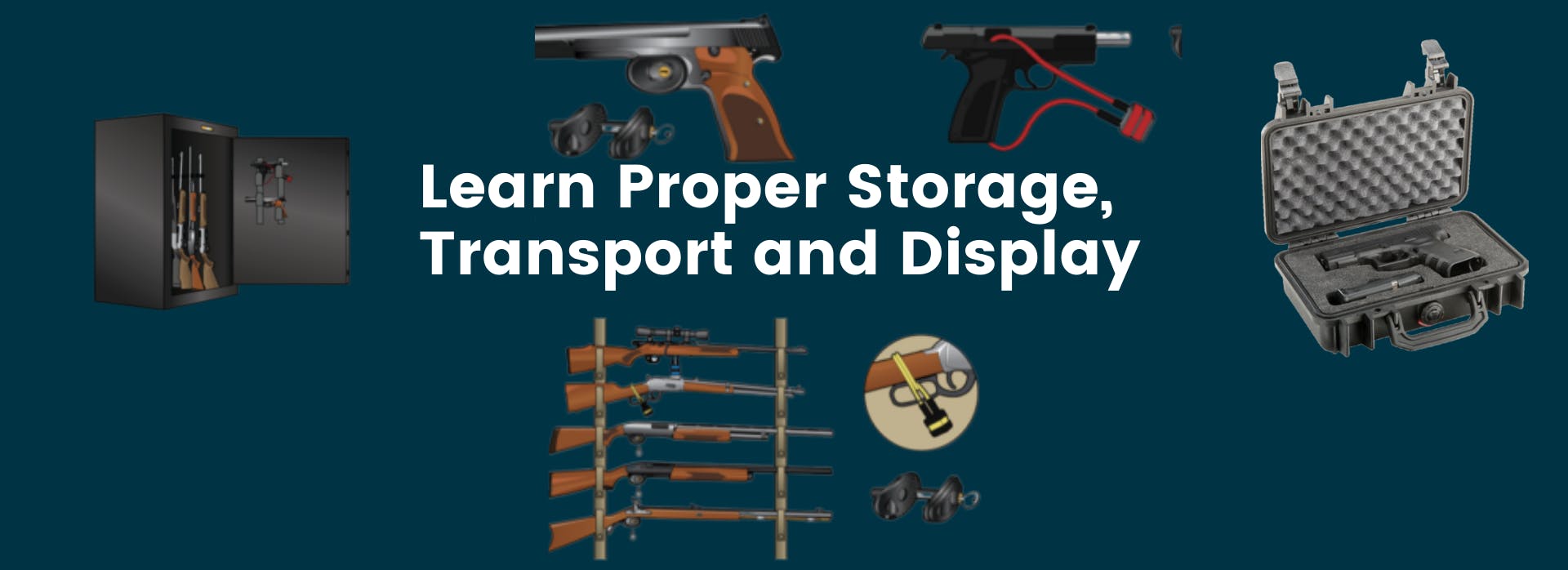
- Non-restricted: unloaded, always. Then one of: a secure locking device (trigger or cable lock), the bolt or bolt carrier removed, or a container, receptacle or room that is kept securely locked and constructed so it cannot readily be broken open or into. Ammunition: the firearm must not be readily accessible to ammunition unless the ammunition is stored, with the firearm or separately, in a securely locked container or receptacle that resists break-in.
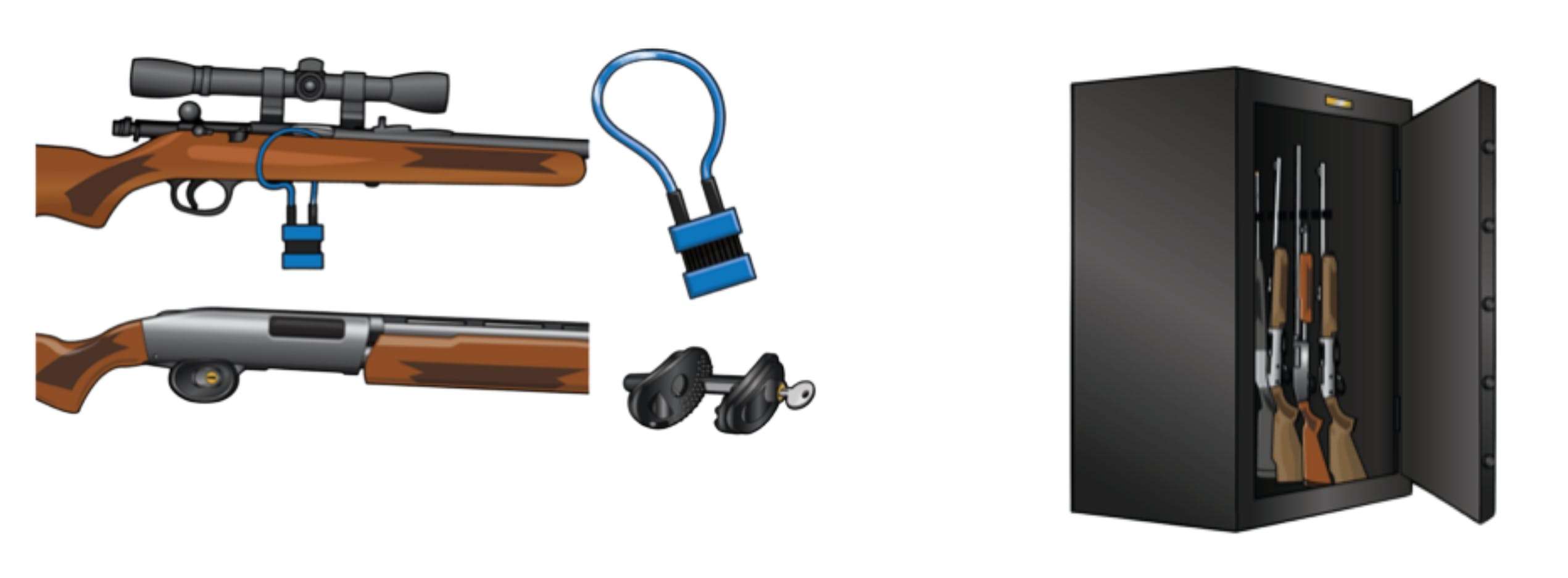
- Restricted: unloaded, always. A secure locking device and a securely locked, break-in resistant container, receptacle or room, both together. Or, standing on its own, a vault, safe or room that has been specifically constructed or modified for secure firearms storage and is kept locked. Ammunition: same principle, and the purpose-built vault, safe or room also qualifies.
- Prohibited: everything in the restricted rules, and an automatic with a removable bolt or bolt carrier has the bolt removed and locked in a different room. The purpose-built vault, safe or room option applies here too, built or modified for prohibited firearms specifically.
Two built-in exceptions apply to non-restricted firearms only. The locking requirement does not apply during temporary storage if you reasonably require the firearm for the control of predators or other animals in a place where it may lawfully be discharged. And both the locking and ammunition requirements do not apply when storing in a remote wilderness area that is not subject to any visible or reasonably ascertainable use incompatible with hunting. These exist for working firearms in real conditions. If they do not describe your situation, they do not apply to you.
Storing non-restricted firearms
Under section 5, a non-restricted firearm is stored unloaded, and it is either rendered inoperable (secure locking device, or bolt or bolt carrier removed) or locked inside a container, receptacle or room that resists being broken open or into. One or the other satisfies the regulation. Then the ammunition rule applies on top: the firearm must not be readily accessible to ammunition unless that ammunition is in a securely locked container or receptacle.
Notice the asymmetry, because it catches people. A locked room can secure the firearm. The ammunition clause for non-restricted firearms names a locked container or receptacle. A rifle locked in a closet with loose boxes of shells on the shelf beside it is the kind of setup that invites an argument you do not want to have. Put the ammunition in its own locked container and the question never comes up.
Storing restricted firearms
Section 6 raises the bar. A restricted firearm is stored unloaded, and either it wears a secure locking device and sits inside a securely locked, break-in resistant container, receptacle or room (both together, not one or the other), or it is stored in a vault, safe or room that has been specifically constructed or modified for secure firearms storage and is kept locked. The purpose-built option stands on its own; the improvised option needs the device and the container together.
The ammunition rule matches: not readily accessible unless locked in a container or receptacle, or kept in that purpose-built vault, safe or room.
Storing prohibited firearms
Section 7 stacks on top of the restricted requirements. Most owners never touch this class. If you do: the firearm meets the restricted storage standard, and if it is an automatic with a removable bolt or bolt carrier, the bolt or bolt carrier is removed and stored in a separate, securely locked, break-in resistant room from the firearm itself. The purpose-built vault, safe or room alternative applies here too, built or modified for prohibited firearms specifically.
How do you store ammunition?
The regulation does not require ammunition to be locked up in isolation. It regulates the relationship between the ammunition and the firearm. A firearm in storage must not be readily accessible to ammunition that can be discharged from it, and the way you satisfy that is by locking the ammunition up, either in the same locked container as the firearm or in its own.
So yes, you can store ammunition in the same safe as your firearms. That is explicitly contemplated. And yes, you can store it separately in its own locked container. What you cannot do is leave a secured firearm within easy reach of unsecured ammunition. Remember also what "unloaded" means in the regulation: nothing in the breech or chamber, and nothing in a magazine attached to or inserted into the firearm. A loaded magazine seated in the rifle fails storage before you even reach the ammunition clause.
The storage mistakes we see most often
Thirty years of teaching the CFSC and CRFSC gives you a clear picture of where storage goes wrong, because the same questions come up in every class. These are the patterns, not stories about any one student.
Treating the front door as the locked room. "My house locks" is the most common misreading of the regulation. The locked container, receptacle or room has to be the thing securing the firearm, constructed to resist break-in. Your dwelling as a whole is not a storage container.
A trigger lock on a restricted firearm, and nothing else. The non-restricted rule is one-or-the-other. The restricted rule is both-together, or a purpose-built safe. Owners moving up from a rifle to a first handgun carry the old habit with them.
The loaded magazine beside the gun. The magazine is out of the firearm, so it feels compliant. But loose, unsecured ammunition next to a stored firearm runs straight into the readily-accessible problem. Ammunition goes under lock, full stop.
Confusing display with storage. A rifle mounted on the wall is not in storage; it is on display, and display has its own rules, covered below. It does not get to float between the two categories with the requirements of neither.
Buying the cabinet and skipping the habit. The most expensive safe in the world does nothing on the day you left the firearm on the workbench. Storage compliance is a routine, the same way we teach ACTS and PROVE as a routine. The rule is applied every time or it is not really your rule.
How do you legally display a firearm in Canada?
Display means visible and intentionally shown, like a firearm mounted on a wall or kept in a display cabinet. The regulations treat display as a separate category from storage because a displayed firearm is more easily noticed and accessed.
Displaying non-restricted firearms
Under section 8, a non-restricted firearm may be displayed in your home only if it is unloaded, it is rendered inoperable by a secure locking device or kept in a securely locked, break-in resistant container, receptacle or room, and it is not displayed with, and not readily accessible to, ammunition that can be discharged from it.
Displaying restricted and prohibited firearms
Section 9 raises the bar. In a dwelling-house, a restricted or prohibited firearm may be displayed only if it is unloaded, rendered inoperable by a secure locking device, securely attached to a non-portable structure so it cannot readily be removed, and not displayed with or readily accessible to ammunition that can be discharged from it. For an automatic with a removable bolt or bolt carrier, the bolt is removed and stored under lock in a different room.
Display outside a dwelling, such as a gun show table, adds requirements including attachment by chain or metal cable, with a supervised-handling exception when the firearm is detached under the direct and immediate supervision of the person displaying it.
What about transporting firearms?
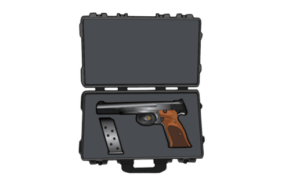
Transport is its own regime under the same regulations, and it scales by class the same way: a non-restricted firearm travels unloaded, a restricted firearm adds a locking device, a locked opaque container, and an Authorization to Transport, and prohibited firearms stack on from there. We have moved the full breakdown, including the current ATT mechanics and the transport rules by class, to its own page: Transporting Firearms in Canada.
Frequently asked questions
Do I need to lock my firearm in my home if I live alone?
Yes. The regulations apply regardless of who else lives in your home. A stored non-restricted firearm must be rendered inoperable by a locking device or stored in a locked container, receptacle or room. The fact that no one else has access does not change the requirement.
Can I store ammunition with my firearm?
Yes, provided the ammunition is in the same securely locked container as the firearm, or locked in its own. The requirement is that a stored firearm not be readily accessible to ammunition, and locked-up ammunition satisfies it.
Do I need a gun safe?
The regulations do not require a "gun safe" by name. For non-restricted firearms, a locking device alone can do it, or a locked, break-in resistant container, receptacle or room. For restricted firearms, the improvised route needs both a locking device and a locked container, which is why most restricted owners simply buy a proper safe: the purpose-built vault, safe or storage room meets the requirement on its own.
Does a locked closet count as a locked room?
It can, if it is kept securely locked and is constructed so that it cannot readily be broken open or into. A hollow-core door with a privacy knob is not that. Construction matters, and it is the part an inspector or a court would look at.
Are the rules different at a cabin or camp?
The storage regulation follows the firearm, not the address. The two non-restricted exceptions (temporary predator-control storage, and remote wilderness areas not subject to use incompatible with hunting) are the only relaxations, and they are narrower than people assume. A seasonal cabin on a serviced lake is not a remote wilderness area.
What about antique firearms?
Antique firearms, as legally defined, must be unloaded for storage, display and transportation. The legal definition of antique is specific and does not cover every old firearm, so confirm classification with the RCMP Canadian Firearms Program before relying on it.
What happens if my storage does not comply?
Unsafe storage can be prosecuted criminally, and it is one of the more common ways otherwise lawful owners end up before a court, usually discovered during an unrelated event like a break-in or a wellness check. Compliance is cheap. The alternative is not.
Trained, covered, and squared away
The storage rules set the legal floor. What keeps owners out of trouble long-term is the habit layer on top, and that is what we build in the CFSC and CRFSC and what the Silvercore Club exists to support after the course: a community that keeps you sharp and has your back. Membership includes $5 million in liability coverage through Lloyd's of London while you are engaged in lawful firearms activities, RCMP-approved club status for ATT and RPAL purposes, our online firearms safety course, and partner pricing on gear including Nanuk cases, which are exactly what the transport regulations are describing. It is $59 a year at silvercore.ca/club, and for new owners working through storage for the first time, it is the bridge between knowing the rules and having the gear and the people to follow them properly.
Where to take your CFSC or CRFSC with Silvercore
Silvercore teaches across British Columbia from a permanent classroom in Delta and at established venues on Vancouver Island and the Lower Mainland.
Lower Mainland
- Delta: Silvercore Training Facility, #115 - 7198 Vantage Way. Our permanent classroom and the home base for most of our weekend courses.
- Langley: The Range Langley, 9938 201 Street #2.
- New Westminster: Douglas College, 700 Royal Avenue.
Vancouver Island
- Nanaimo: Vancouver Island University, 900 Fifth Street.
- Parksville: Shelly Hall, 186 Shelly Road.
- Comox: Comox Valley Sports Centre, 3001 Vanier Drive, Courtenay.
- Victoria: Quality Inn Downtown, 850 Blanshard Street.
To book your CFSC, CRFSC, or both in a single weekend, see the Canadian Firearms Safety Course (Non-Restricted and Restricted) at Silvercore.
About the author
Travis Bader is the founder of Silvercore Outdoors, Canada's largest firearms safety training company. He has personally taught the Canadian Firearms Safety Course and Canadian Restricted Firearms Safety Course since 1994, and through Silvercore has trained and certified most of the firearms instructors currently teaching in British Columbia. Travis hosts the Silvercore Podcast, where he explores firearms, hunting, and the outdoors with leaders from across the industry.
Travis Bader
Silvercore Outdoors


